
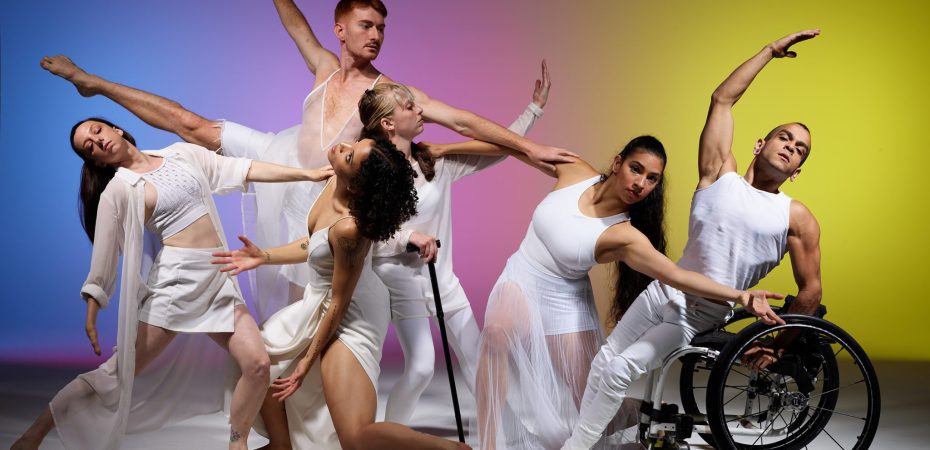
Because you’re not looking. To be honest, I didn’t used to, either.
Yesterday, I had the privilege of joining a webinar led by Erin Perkins. She is the deafblind owner of Mabley Q, which offers accessibility education and consulting. And Erin is not messing around. She was dropping knowledge bombs about accessibility and the disabled community that had me taking notes like crazy.
Some of the facts she shared about people with disabilities that were pretty impressive, including:
- The disabled community has $6 trillion in spending power – that’s trillion with a T.
- People with disabilities make up 15% of the world’s population. About a billion people.
- In the US alone, disabled people control $490 billion in annual disposable income. When you add family members who make accessibility-influenced purchases, that number grows even larger.

Erin wasn’t throwing around these numbers as feel-good statistics. She was talking business strategy, competitive advantage, and market reality.
My Own Wake-Up Call
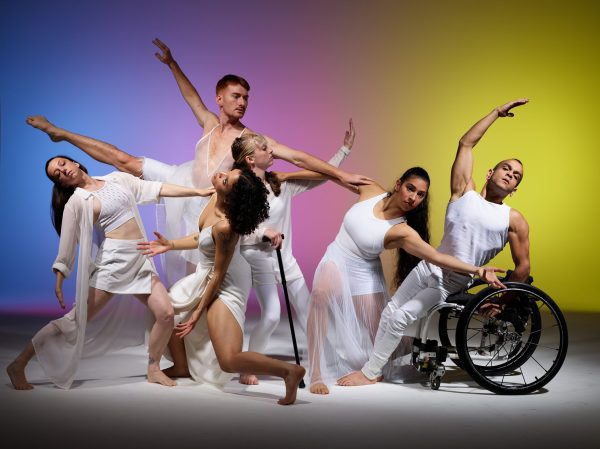
Listening to her reminded me of an event from years ago, when I was still in the corporate world. For accessibility month, they brought Axis Dance Company, which was made up of both disabled and non-disabled performers. And I’m not gonna lie – it floored me. Despite being disabled for almost two decades at that point, I’d never heard of this dance company. Or any disabled dance company, for that matter.
But what really got to me was watching the audience. You could see it on their faces. They had no idea that people with missing limbs or other disabilities could actually be dancers. Professional dancers. Like, this was a completely foreign concept to them. And I’ll admit – I was kinda in the same boat.
And that’s when it hit me: we all think we know what “accessible” means. However, we’re working with a pretty limited definition. Even I was.
Your Definition of Accessibility is Too Small
When most people hear “accessibility,” they think ramps and bigger fonts. Maybe closed captions if they’re feeling fancy. But accessibility is much, much bigger than that – and so is the disabled community.
We’re not just sitting around waiting for the world to accommodate us. We’re out here running businesses. We are creating art, dancing, and competing in sports. We’re building websites and teaching classes. We’re doing literally everything you can think of.
The problem isn’t that we’re not doing these things. The problem is that you’re not seeing us do them.
We’re Already Here, Doing Everything
Just like Erin. She’s not running her business to prove a point or inspire anyone. She’s running it because she’s really good at what she does and has something valuable to offer. But how many deafblind entrepreneurs do you know about? How many have you actively sought out?
Here are just a few examples of disabled people absolutely crushing it in their fields:
- Haben Girma – The first deafblind graduate of Harvard Law School, now a disability rights advocate and author
- Liz Jackson – Founder of The Disabled List, connecting brands with disabled talent
- Pete Eckert – Blind photographer whose landscape work has been featured in galleries and publications
And that’s just scratching the surface! There are disabled CEOs, artists, athletes, teachers, engineers, writers – look in any field or industry, and you’ll find us.
The Numbers Don’t Lie
Here’s what Erin was getting across with those numbers: we’re not some tiny niche market hiding in the corner. We’re everywhere, doing everything, and we have money to spend.
As disability advocate Alice Wong said (and I’m paraphrasing a bit): We are not your inspiration. We are not your burden. We are human beings with agency, creativity, and economic power.
So why does it feel like we’re invisible? Because you’re not looking.
When was the last time you intentionally supported a disabled-owned business? Or followed a disabled creator’s work? Probably not recently, right?
It’s not entirely your fault. We’re not exactly front and center in most marketing campaigns or media representation. But we exist whether you see us or not.
What This Actually Means for Business
It’s not about doing us a favor. It’s about not missing out on what we bring to the table.
That website with tiny fonts and terrible color contrast? It’s telling a billion potential customers that their business doesn’t matter to you. That event without sign language interpreters? You’re missing out on expertise, networks, and purchasing power. That job posting requiring “excellent verbal communication skills” for a data entry position? You just eliminated qualified candidates for no good reason..
What You Can Do Right Now
Here’s your homework: actively seek out disabled-owned businesses, disabled creators, disabled professionals in your field. Follow them. Buy from them. Learn from them.
Not because you’re being a good person, but because you’re probably missing out on some incredible talent and perspectives.
When you’re making decisions about your business, think carefully. This could be about website design, event planning, or hiring. Ask yourself: “Am I accidentally excluding people who could be customers, collaborators, or employees?”.
The Real Truth
True accessibility isn’t just about ramps and screen readers (though those matter too). It’s about recognizing that disabled people are already part of every industry, every community, every market.
We’re not waiting for permission to participate. We’re already here. The question is: are you ready to see us?
Key Takeaways
- The disabled community represents massive economic power—$6 trillion globally, $490 billion in the US
- We’re 15% of the world’s population—not a niche, but everywhere
- Accessibility isn’t charity – it’s smart business that opens doors to talent and customers
- The visibility problem is yours, not ours. We’re already succeeding in every field. And we’re not going anywhere.
Ready to Expand Your View?
Erin at Mabley Q is just one example of the incredible disabled entrepreneurs out there. If you want to learn from someone who’s building a business while navigating a world that wasn’t designed for her, connect with her:

- Website: mableyq.com
- Instagram: https://www.instagram.com/mabely_q
Resources for Learning More
- The Disabled List – Directory of disabled talent across industries
- Disability:IN– Business network focused on disability inclusion
- “Disability Visibility” by Alice Wong – Essential reading on disabled experiences
Because the only thing worse than not seeing disabled people is pretending we’re not already everywhere.
Now go expand your worldview!
 Up Down Walk with Lisa