
A lot, actually. And it’s time we had it.
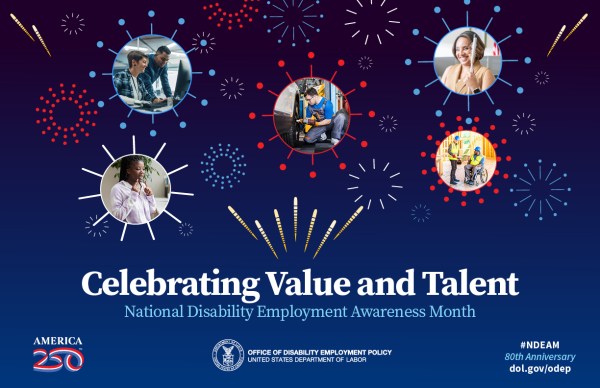
It’s National Disability Employment Awareness Month. Again. For the 80th time, actually. And once again, we’re being told to celebrate the “value and talent” that people with disabilities bring to the workplace. We’re supposed to feel inspired by corporate posts with stock photos of smiling wheelchair users in pristine office spaces.
Cool. Now let’s talk about what’s actually happening.
The Gap Between Awareness and Reality
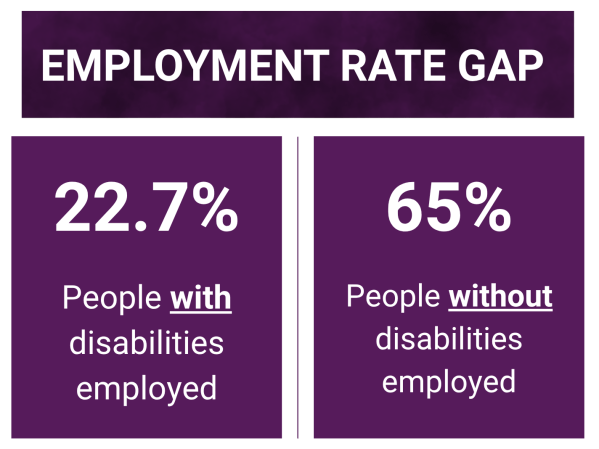
Here’s what the official NDEAM messaging won’t tell you: people with disabilities have an unemployment rate of 7.5% compared to 3.8% for people without disabilities—nearly double. And only 22.7% of people with disabilities are employed at all, compared to much higher rates for people without disabilities (U.S. Bureau of Labor Statistics, 2024). That’s 2024, almost eighty years after this awareness campaign started.
So this month, everyone’s busy posting inspirational content for NDEAM. Meanwhile, the daily reality for disabled people is still fighting to prove we deserve a seat at the table. Or a contract. Or a freelance gig. Or literally any opportunity to use our actual qualifications.
“Eighty years of awareness. Unemployment rates still nearly double. Maybe it’s time to talk about what awareness doesn’t fix.”
What “Awareness” Doesn’t Fix
The Application Process is Broken
Job applications that crash with screen readers. Online portals that aren’t keyboard-navigable. Video interview platforms with zero captioning. You can post all the inspiring content you want, but if your application process is inaccessible, you’re just performing inclusion.
Accommodation Requests Feel Like Interrogations
Asking for accommodations shouldn’t require a PhD, three doctor’s notes, and a detailed explanation of your medical history. But that’s often what it takes. Many disabled people don’t disclose or request accommodations because the process is SO exhausting that it’s easier to just struggle through. That’s not inclusion. That’s survival.
The “Inspiration” Problem
We’re not here to inspire you. We’re here to do the job we’re qualified for. When companies hire disabled people as feel-good stories or diversity check boxes, it’s patronizing. Hire us because we’re qualified. It’s not complicated.
The Assumption That Disabled Equals Less Capable
This one’s insidious because it’s often unspoken. The evidence is clear. You are passed over for promotions. Colleagues direct questions to your non-disabled coworker instead of you. You are praised excessively for doing basic tasks that are literally your job.
What Actually Needs to Change
Awareness is fine. But awareness without action is just performance.
For Employers:
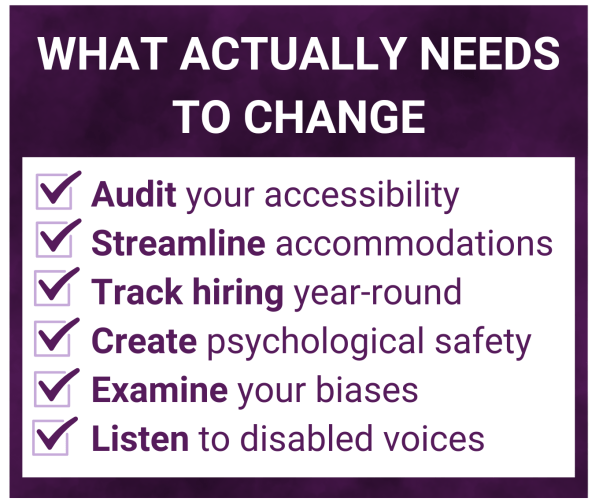
Audit your accessibility. Not just your physical space, but your entire hiring process. Streamline accommodations. Track your actual hiring and retention all year, not just during October. Create psychological safety where disabled employees feel comfortable disclosing.
For Hiring Managers:
Examine your biases. Focus on qualifications, not inspiration. Learn basic accommodation resources (Job Accommodation Network at askjan.org is free and incredibly helpful).
For Everyone:
Stop treating disability employment as optional. Listen to all disabled voices, not just the ones telling you what you want to hear. Understand that accommodations benefit everyone.
My Reality
I became an amputee in my late 40s. I’d already built a career, established my professional reputation, proven my capabilities. And still, I worried about whether I’d be taken seriously. Whether clients would trust me. Whether I’d be seen as competent or as a liability.
That fear shouldn’t exist for someone with my experience and qualifications. But it does. Because we’ve spent 80 years on “awareness” without enough focus on actual systemic change.
I work as a consultant and freelancer now, which gives me more control. But even in freelancing, I navigate assumptions and accessibility barriers. Occasionally, someone comments, “Wow, you’re so inspiring for still working.” This makes me want to scream. Loudly. And for a very, very long time.
The Bottom Line
National Disability Employment Awareness Month exists because we still need it. That should tell you something.
So by all means, post your NDEAM content. Share the official resources. Raise awareness. But then do something about it. Audit your processes. Fix your accessibility gaps. Hire disabled people because they’re qualified.
Because awareness without action is just noise. And disabled professionals deserve better than eighty more years of noise.
“Awareness without action is just noise.”
Resources
So when you’re ready to do something beyond posting about NDEAM:
- Job Accommodation Network (askjan.org) – Free consulting on workplace accommodations
- NDEAM Official Resources – dol.gov/agencies/odep/initiatives/ndeam
- Disability:IN (https://disabilityin.org/) – Resources for disability inclusion in business
And if you’re a disabled professional navigating this landscape: you’re not alone. Your frustration is valid. Your qualifications are real. You deserve better than performative inclusion.
Now let’s make that happen.
 Up Down Walk with Lisa