

Because the process is broken. And yes, we CAN fix it.
The Accommodation Gauntlet
Imagine walking into a job interview. Now imagine that interview happening every single time you need something to help you work effectively. Welcome to the world of disability accommodations.
Take my own experience. I arrived for a job interview, discovered there was no elevator in a second-floor office. I then suddenly found myself auditioning for the role of “Most Determined Candidate” just by navigating the stairs.
I buzzed in, asked if there was an elevator (reply “No…”), and climbed those stairs. When I finally reached the receptionist, something magical happened. Or, rather, didn’t. Her face contorted into a look that clearly said, “You shouldn’t even be here.” The unspoken message? “Your need for an accommodation is a huge inconvenience.”
It’s Not Just Me
My experience isn’t unique. Just ask disabled professionals everywhere. My son, who is visually impaired, has his own horror stories. Like the time he walked into a Dollar Tree looking for a job application.
“Can I get an application?” he asked.
“Sure,” they said, handing him a paper form.
“Could I fill this out online? This is really difficult to see.”
Response? A flat “No, we only accept paper applications.” In 2015.
Translation: Your accessibility needs are not our problem.
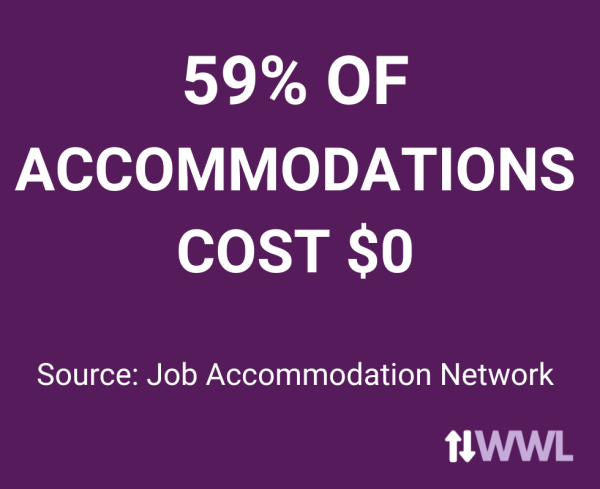
And the word part? According to the Job Accommodation Network, 59% of accommodations cost absolutely nothing to implement. Yet disabled professionals are still treated like we’re asking for the moon. We’re not. We’re asking for basic access.
The Psychological Warfare of Accommodations
Here’s the dirty little secret: Asking for accommodations feels like an additional job interview. Because it is. You’re not just proving you can do the job, you’re also proving you deserve to exist in the workplace.
Every request becomes an interrogation. Every need, a potential liability. Every adaptation, a burden.
During my son’s internship at a large corporate healthcare organization, he was constantly shuffled around. Why? Because people didn’t know what to do with someone who wasn’t 100% sighted. He could navigate perfectly well, but his mere presence made others uncomfortable.
What Actually Needs to Change
For Employers:
- Accommodations are not a favor. They’re a legal requirement.
- Stop treating accessibility like a checkbox. Make it part of your core process.
- Train your teams to see disability as a form of diversity, not a problem to solve.
For Hiring Managers:
- Your job is to remove barriers, not create them.
- An accommodation request is not a red flag. It’s a sign of a professional who knows exactly what they need to excel.
- If someone needs a different setup to do their job brilliantly, that’s not a weakness. That’s smart management.
For Everyone:
- Disability is not a special category. It’s part of human diversity.
- Accommodations benefit everyone, not just disabled employees.
- The goal is creating workplaces where everyone can contribute fully.
Resources to Actually Make Change
- Job Accommodation Network (askjan.org) – Free consulting on workplace accommodations
- ADA.gov – Comprehensive information on legal rights
- Disability:IN – Resources for disability inclusion in business
The Bottom Line
Accommodations are not an interview. They’re not a performance. They’re a basic human right.
Stop making disabled professionals prove their worth. We’re already here. We’re already qualified. We just need the same opportunity to succeed.
Now, let’s make that happen.
 Up Down Walk with Lisa