
Oh, that’s easy – it’s because we still treat accessibility like a “nice to have” instead of the default.
Sometimes I’m walking up to a store with my my cane and I’m tired, sometimes I’m rolling up in my wheelchair. Either way, I want to get through the door easily.
However, unfortunately, “accessible” still too often means “someone will come help you if you ask.” And no, I don’t want to knock on a door and request entry like I’m trying to get into a secret club. I just want to get in like everyone else. Without having to announce my disability to a stranger.
This month marks 36 years since the Americans with Disabilities Act (ADA) was signed. Thirty. Six. Years. The ADA is basically a millennial. Old enough to have back pain and remember the awesome music of the 2000s, yet still young enough to be treated like it’s a kid asking for a second helping of dessert.
Now, I don’t want this post to be completely negative. There have been real changes. I’ve benefited from them. Plenty of us have. But I’m still seriously annoyed that so many needed fixes that could help so many are small and obvious, but we keep treating them like optional upgrades instead of basic requirements.
The door problem is not a disabled people problem.
Let’s start with a pretty simple example: doors.
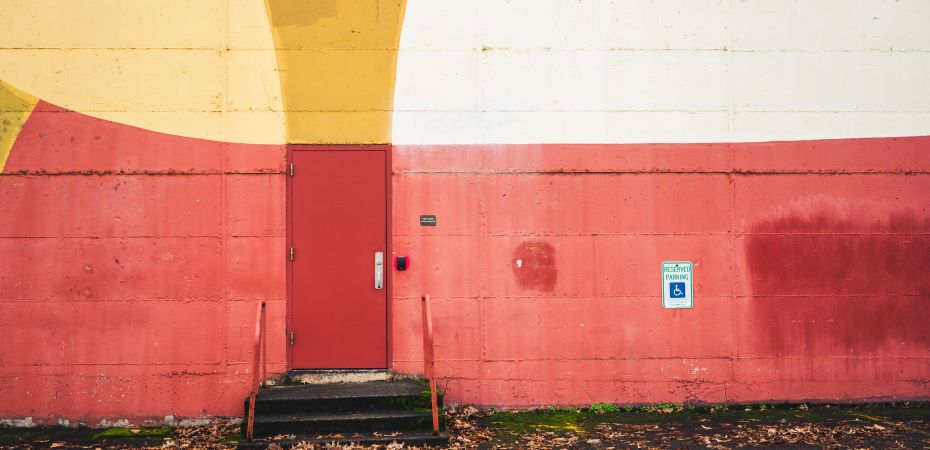
Just about every building and store should have an automatic door option by now. Not a heavy door with a tiny wheelchair sticker slapped on it like that’s the same thing. Not a plan that involves me knocking and waiting outside while someone decides whether or not they’re available to let me in.
That wheelchair sticker is not accessibility. It’s a decoration. It’s a little gold star that says, We thought about it for three-to five seconds and our lawyer said this covers us from lawsuits .An automatic door helps me, yes. It ALSO helps:
- Someone pushing a stroller
- Someone carrying groceries or bags in both hands
- Someone with crutches
- Someone with a temporary injury, like a broken arm
- Someone wrangling a toddler
- Someone who just wants to enter a building without performing an upper-body workout
Accessibility isn’t a special feature. It’s basic design that works for real life.
We’ve had 36 years. Thirty six. Why are we still building things wrong?
Like…what’s up with new construction?
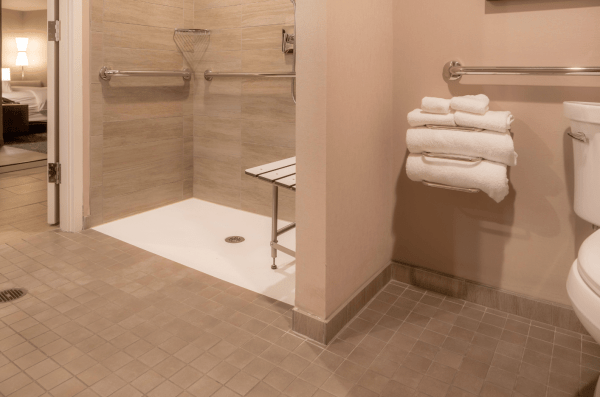
Why are we still building brand-new places that aren’t accessible? Just make the doors wider. Build entrances that don’t require a workaround. Design bathrooms that don’t treat mobility aids like afterthoughts.
The ADA has been around long enough that if accessibility had been treated like the default from the beginning, we’d be living in a very different world by now.
Instead, we keep doing the same thing:
- Build it for “normies.”
- Wait for someone to complain.
- Add a patch / questionable fix.
- Call it progress.
That’s not progress. That’s procrastination with a sad, pathetic ribbon on it.
Everyone is aging. Nobody is immune.
I know people hate thinking about getting older. I 100% get it. But, seriously, as long as you’re here, there’s a really solid chance you’ll need accommodations at some point.
Remember: disability isn’t rare. Most people will experience it at some point, temporarily or permanently.
So why do we keep acting like accessibility is for a tiny group of “other people”? It’s for future you. It’s for your parents. It’s for your kids. It’s for your neighbor who’s fine today and recovering from surgery tomorrow.
It’s not just buildings. It’s everything.
Accessibility isn’t only about ramps and doors. It’s also about the everyday stuff that makes life either workable or exhausting.
Money should have a more tactile way to tell bills apart. Technology should be more accessible by default. Captions should not be optional.
I’ve worked with large organizations where captions on recorded trainings are always optional, rarely added. And I’ve seen standard slide decks that ignore contrast and how colors render on different screens, and then act surprised when people can’t access the content.
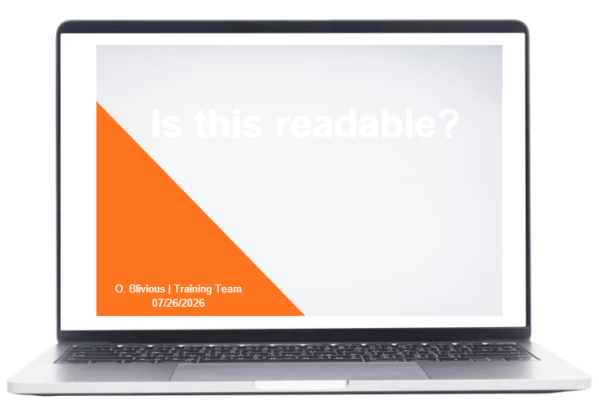
It’s inaccessible.
What in the absolute-?!?! Sigh…
The lack of contrast and thoughtful color schemes don’t just make it hard for people with low vision. It’s hard for anyone who has eyes and would like to keep using them.
Yay and boo, both true
So yes, happy anniversary to the ADA. And I really mean that.
Yay for the changes that have helped people live, work, shop, travel, and exist with a little more independence.
And also boo to the fact that we’re still treating accessibility like a favor, a workaround, a special request.
Because a lot of what we’re asking for isn’t even extra. It’s just better design. For everyone.
My wish for year 37
Stop making people ask.
Stop making access a customer service interaction.
Stop acting like the bare minimum is some kind of generous perk.
Build accessibility in from the start. Make it the default. Make it normal.
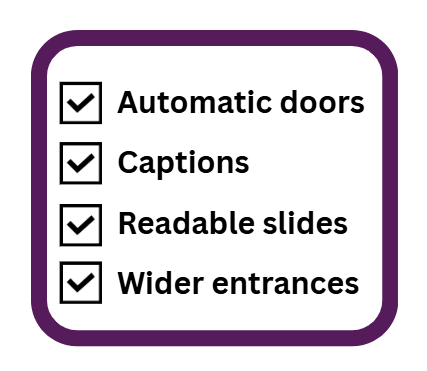
Automatic doors. Captions. Readable slides. Wider entrances. Practical spaces.
Not because disabled people deserve a gold star for showing up in public, but because everyone deserves a world that doesn’t make basic participation feel like a negotiation.
And if you’re still thinking, But that sounds expensive, I have great news! It’s cheaper than rebuilding everything later. It’s cheaper than lawsuits. And it’s definitely better than shutting people out and calling it ‘not our problem.’
ADA Year 37 can be the year we stop congratulating ourselves for noticing disabled people exist, and start building a world that actually plans for us to show up, whether it’s convenient or not.

